The First Four Weeks: A Plan for Starting a YouTube Channel From Zero
People ask how long it takes to build a channel from nothing. The honest answer is that nobody knows, because it depends on the subject, the market, the competition and a fair amount of luck.
But the question underneath it is a better one, and that one does have an answer. What actually separates the people who are still publishing in month six from the people who quit in week three is almost never talent. It is whether they had a plan or were improvising.
Improvising looks like this: get excited, publish three videos, get very few views, conclude the whole thing does not work, stop. The effort was there. The sequence was not.
So here is a four-week structure I would give anyone starting now. It does not promise views, subscribers or money – no schedule can. What it does is make sure that at the end of the month you have a working process and enough published material to actually learn something from.
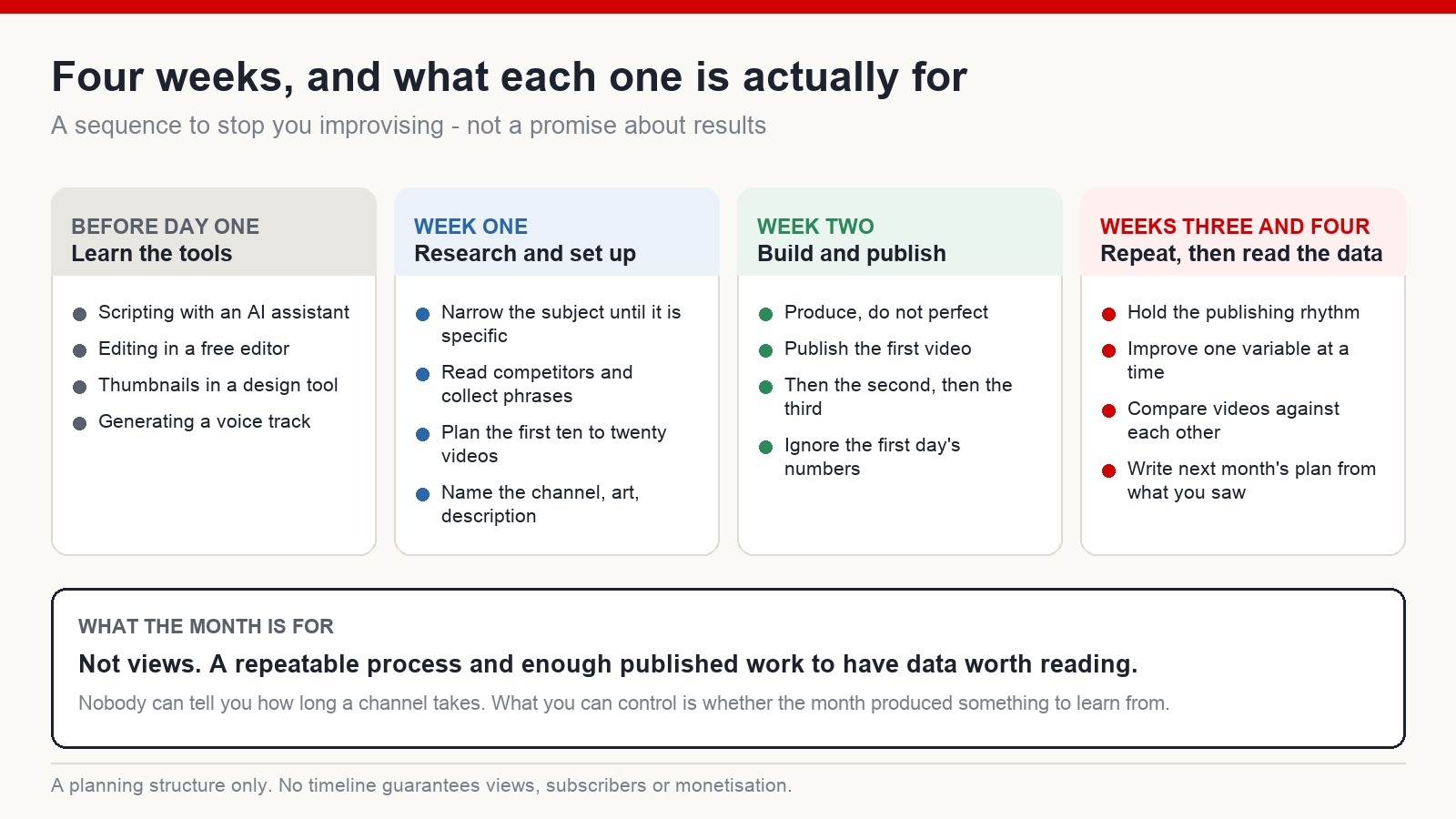
Before day one: learn the tools, badly
Before you think about the channel at all, spend a couple of evenings getting familiar with the production chain. Drafting a script with an AI assistant. Cutting something together in a free editor. Making a thumbnail in a design tool. Generating a voice track if you are not planning to use your own.
The point is emphatically not to get good. It is to remove the friction, so that later, when you have an idea, the gap between the idea and a finished file is hours rather than a weekend of learning software.
Make one throwaway video that you never publish. It will be bad. That is what it is for.
Week one: research and setup
Days one and two – narrow the subject
The single most common mistake at the start is picking something far too broad. Travel. Health. Money. Those are not subjects, they are industries, and a new channel is invisible inside them.
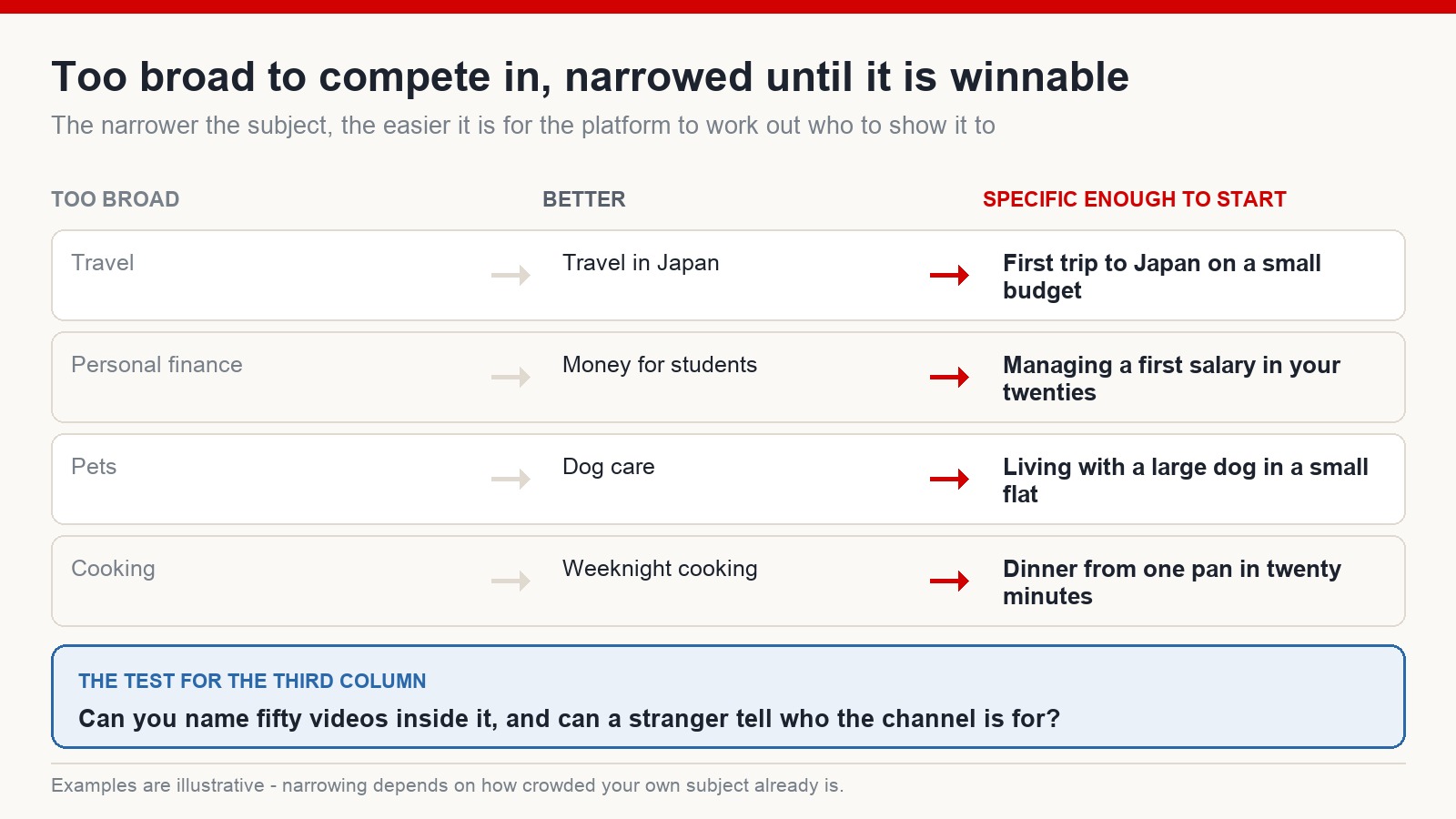
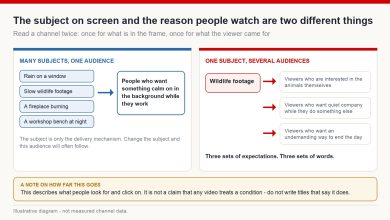
What you want is a subject inside a subject. Not travel, but a first trip to one country on a small budget. Not personal finance, but managing a first salary. Not dog care, but living with a large dog in a small flat.
Two tests before you commit. Can you list fifty video ideas inside it? And could a stranger, reading your channel name and three video titles, say who the channel is for? If either answer is no, narrow it further. Narrower subjects are easier for the recommendation system to place, and much easier for a viewer to decide to subscribe to.
Days three and four – collect the raw material
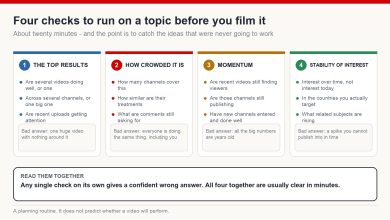
Now go and read the channels already working in that space. Not to copy them – to understand which phrases people search, which framings get clicked, what the openings do, what the top comments complain about.
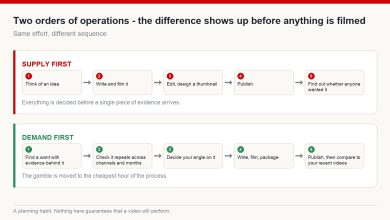
Come out of it with a list, not a video. Plan at least ten to twenty video ideas before you make one. This matters more than it sounds: a channel with twenty planned videos behaves completely differently from one with a single idea, because you are never one bad week away from having nothing to publish.
Day five – build the channel
Name, profile image, banner, description. An afternoon’s work, and it should stay an afternoon. The name wants to be memorable, related to the subject, and not so narrow that you cannot grow out of it in two years.
Do not spend three days on the banner. Nobody has ever subscribed because of a banner.
Days six and seven – live in the niche
Watch the content properly, as a viewer rather than a competitor. Follow the people doing it well. Read the communities where this audience actually talks.
This sounds soft, and it is the part people skip, but it is how you develop the instinct for what this audience finds obvious, what it finds new, and what it is quietly tired of.
Week two: build and publish
Days eight to eleven are production. Not one video – a small run of them. Working in batches is faster than working one at a time, and it stops the entire channel depending on how you feel on a particular Tuesday.
Then, around day twelve, publish. Actually publish.
Two things to hold on to here. First, the first video will not be good, and it does not need to be; it needs to exist, because everything you learn afterwards is measured against it. Second, put your attention on the title, the thumbnail and the first thirty seconds. That is where a video is won or lost, far more than in the polish of the edit.
Then resist the urge to refresh the analytics every hour. Early numbers on a new channel tell you almost nothing, and treating them as a verdict is the fastest route to quitting.
Weeks three and four: repeat, then read
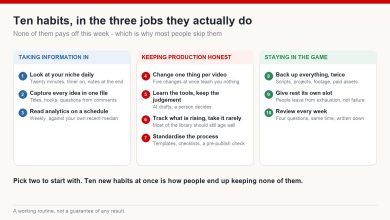
Days thirteen to eighteen are about rhythm. Keep publishing at whatever pace you can genuinely sustain – consistency here means a schedule you can hold for months, not a heroic sprint you abandon.
Improve one thing at a time. If you change the thumbnail style, the title format and the opening all at once and the next video does better, you have learned nothing about which change did it.
Then in the final stretch, look at what you have.
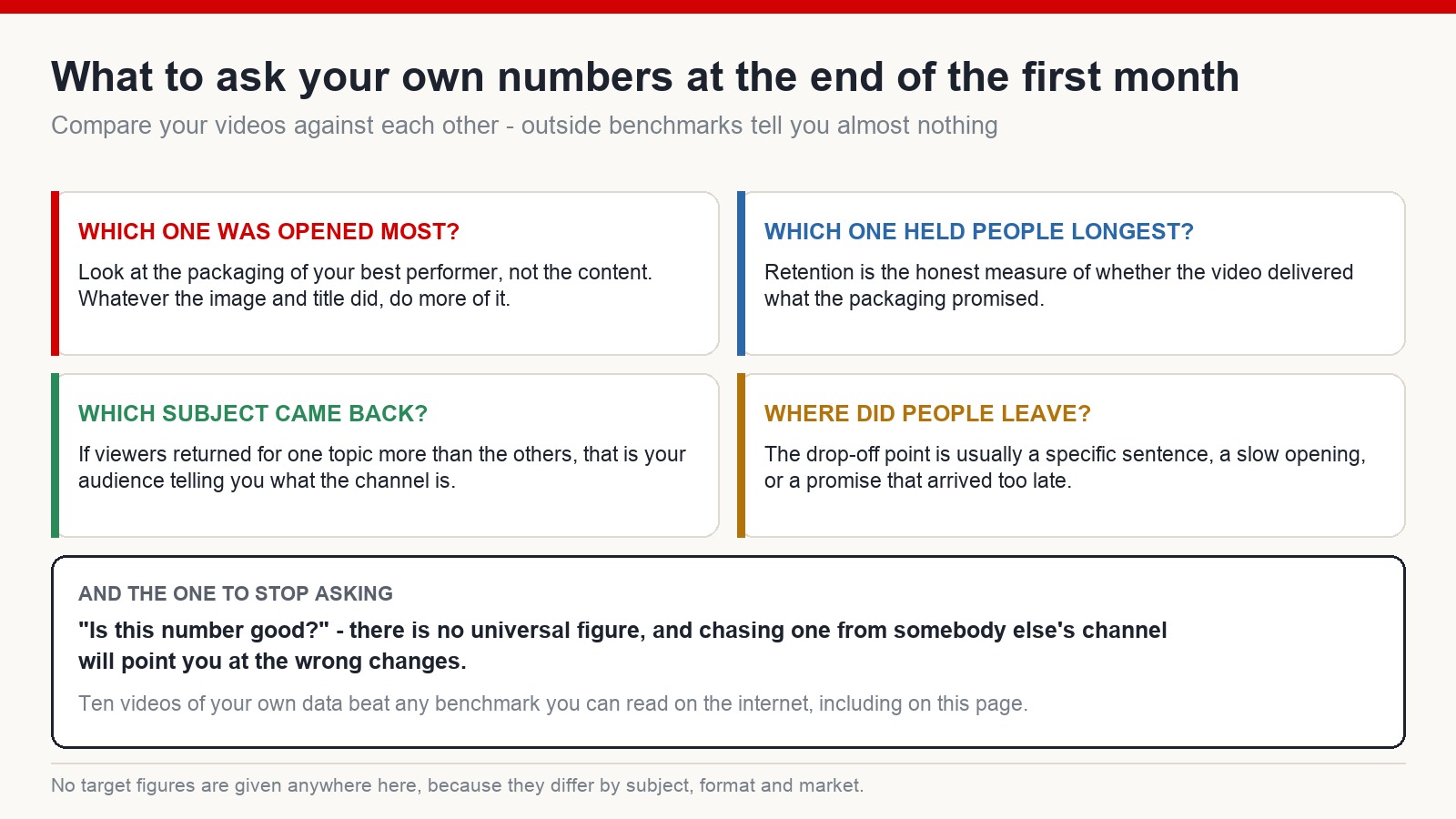
Four questions, and only four: which video was opened most, which one held people longest, which subject brought viewers back, and where in your videos people leave. The answers point at your next month’s plan far more reliably than any advice you can read, including this article.
The question to stop asking is whether your numbers are “good”. There is no universal figure – it varies by subject, format and market – and chasing somebody else’s benchmark will point you at the wrong changes. Compare your videos against each other. That is the only comparison that is really about your channel.
Search optimisation is not just the title
Since it comes up constantly: putting keywords in the title is the smallest part of getting found.
What actually decides whether the platform keeps showing a video is whether people who click it stay, finish, and go on to watch more. Titles and descriptions help the system understand what a video is. Retention decides whether it is worth showing again. Optimise the words, certainly – but not at the expense of the thing the words are pointing at.
Three things that quietly stall channels
Publishing on inspiration. Five videos one week, nothing for a month, then something unrelated. Neither the audience nor the algorithm can form an expectation around that.
Changing subject constantly. Finance, then football, then motivation. Every switch resets the system’s understanding of who your videos are for.
Judging too early. A lot of people stop after ten videos. Plenty of channels only start moving at thirty, fifty, sometimes later – and equally, plenty never move at all. Both of those are true at once, which is why the honest advice is to give yourself a horizon you decided in advance, rather than one set by disappointment.
What four weeks is really worth
It is not a shortcut and it is not a guarantee. At the end of it you may well have very few views, and that is a normal outcome rather than a failure.
What you should have is a subject narrow enough to be findable, a queue of ideas, a production process that takes hours instead of days, several videos published, and a month of your own data to argue with.
That is a foundation. Almost nobody who quits in month one ever built one.
Can a beginner really start a channel in four weeks?
You can build the foundation in four weeks – subject, plan, setup, first videos, first data. Growth runs on its own timetable and no schedule controls it.
How many videos a week should I publish?
Whatever you can maintain for six months. A sustainable weekly rhythm beats a burst followed by silence, because the value comes from accumulating both a library and a habit.
Do I need professional editing or design skills?
No. Free editors, design tools and AI assistance have made the technical entry cost genuinely low. The difficult parts are choosing a subject people want and writing openings that hold attention – neither of which is a software problem.
How long until a channel can be monetised?
There is no fixed answer, and anybody offering one is guessing. It depends on the subject, the market, the format and whether the channel meets the platform’s requirements at all. Plan on the assumption that it may take a long time, or not happen.
If you want the longer version of this – research, packaging and format for an English-speaking audience – that is what I teach at mmoyoutube.com.